
Securing budget approval for perimeter security requires speaking the language of executives and stakeholders. You understand threats, vulnerabilities, and layered defenses. Executives prioritize quarterly performance, operational continuity, and return on investment. Translating clearly between these perspectives is critical to securing your site with the solutions you need. You’ll need to position perimeter security as a strategic investment that protects revenue, enables business continuity, and delivers measurable ROI.
Frame Your Argument for a Business Audience
A successful business case depends less on technical specifications and more on financial alignment. It ties each proposed security investment to tangible business outcomes and, ultimately, the bottom line.
Reframe the conversation around what security enables your business to do. For example, protecting business continuity prevents threats from becoming costly interruptions. Protecting revenue-generating assets keeps equipment, inventory, and vehicles driving profitability. Safeguarding your brand reputation through crime prevention maintains customer trust and market position.
Focus on Financial Metrics Over Fear
Avoid fear, uncertainty, and doubt tactics. Seasoned executives respond to data. The main factors that matter to the C-suite include ROI, loss prevention, and operating expenditure (OpEx) versus capital expenditure (CapEx). Data-driven business cases provide concrete numbers that support approval decisions and align with broader organizational goals.
The 5 Components of a Compelling Business Case
Every successful business case for perimeter security investment needs these five components.
1. Define the Problem With Data
Executive decisions depend on the details. Quantify the current security problem with specific numbers using internal incident data and authoritative third-party data on recent crime trends. For example, the median loss from theft, property destruction, and fraud offenses was $210,410 in 2024. In quarter 3 of 2025, the total value of goods stolen reached $111.88 million, mostly due to organized theft rings targeting electronics and copper products.
These and similar statistics relevant to your business can help frame the cost of inaction. Combine broader statistics with your own data on attempted breaches, actual theft incidents, or near-misses.
2. Present the Proposed Solution
After establishing a data-driven problem, present a clear proposed solution. Describe an integrated, multi-layered perimeter security system that addresses the risks your data revealed. Arranging a professional risk assessment can help you ensure clear alignment between proposed investments and your site’s risk factors.
Effective solutions include:
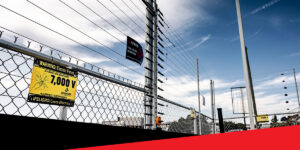
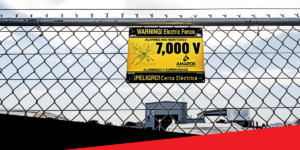
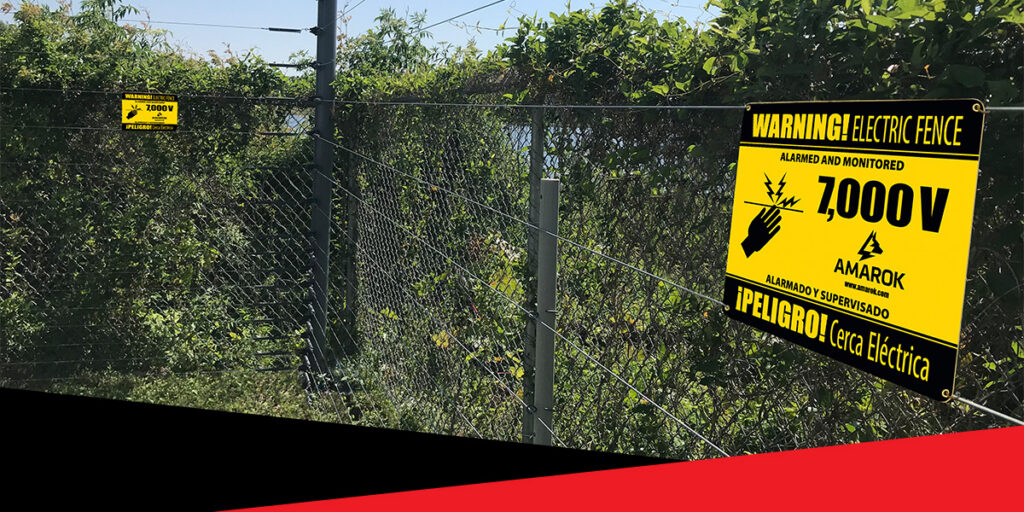
- Electric fencing as a strong physical perimeter barrier with a psychological deterrent effect.
- A video surveillance system with live monitoring to support real-time visibility and swift interventions across facilities.
- Access control systems to manage and track activity at all entry points.
Tie each measure, plus the whole system, to business outcomes like reduced incident rates, faster threat response, and operational continuity.
3. Outline the Financial Justification
This step summarizes the total costs of the proposed investments, the projected savings through loss prevention, and the final ROI calculation. Providing transparent calculations for these metrics helps leaders make confident security decisions.
4. Address the Intangible Benefits
While the bottom line is key, not all benefits fit neatly into ROI calculations. Include other benefits that matter to executives, like:
- Employee morale: Workers feel safer and more valued when protected from crime.
- Brand reputation: Customers see you as a responsible operator who can secure your inventory and assets.
- Insurance savings: Fewer theft claims mean fewer out-of-pocket costs and potentially lower premiums over time.
These intangibles support the financial case and can be the tipping point for approval.
5. Detail the Implementation and Partnership
Show foresight by outlining the implementation process. Emphasize the value of an experienced service partner who can handle installation with minimal disruptions to your schedule while offering ongoing maintenance support. This partnership reduces the burden on internal teams and creates a more frictionless security decision.
Calculating the Financial Impact of Your Security Investment
Making the financial case for your security investment comes down to three elements:
The Cost of Inaction
The total cost of inaction comprises direct, indirect, and opportunity costs likely to arise from maintaining your security posture as-is. Executives may be reluctant if you already have a system in place. If that system is reactive or outdated and is unable to prevent crime, showing the cost of inaction could be decisive.
Direct costs include:
- Stolen assets: Equipment, materials, vehicles, or inventory lost
- Physical damage: Repairs to fences, doors, windows, or vandalized property
- Replacements: Items that must be repurchased
Indirect costs include:
- Downtime: Operations halted while addressing incidents
- Reputational damage: Damaged customer perception and potential contract losses
- Lost productivity: Time spent on police reports, insurance claims, and cleanup
- Insurance cost increases: Claims may trigger higher premiums
- Investigation time: Internal resources diverted from core business
Opportunity costs include:
-
Lost contracts: New or ongoing business opportunities not closed due to security concerns
-
Delayed projects: Revenue-generating work postponed when your team could otherwise have taken on more projects
-
Stunted growth: Expansion plans put on hold until security risks are addressed
The ROI of Your Proposed Investment
Use the standard ROI formula: ROI = [(Net Profit) / (Cost of Investment)] x 100.
For security investment ROI calculations, the investment cost is your total security system cost, including installation, plus your first year of service. Net profit consists of the total estimated losses prevented minus the cost of investment. To estimate the value of losses prevented, multiply the average incident cost by the number of likely incidents per year.
For example, if the average incident costs $200,000 and you prevent two incidents per year, that equals $400,000 in losses prevented. If the security system costs $80,000 to implement over one year, your net profit is $320,000, and the ROI is 400%.
The OpEx Advantage
CapEx refers to a large up-front purchase that is depreciated over time. OpEx represents a predictable monthly operating expense. Strategic benefits of minimizing CapEx in favor of OpEx for security investments include:
- Avoiding large capital request approval hurdles.
- Presenting predictable costs for budget planning.
- Gaining a managed service partner’s ongoing support.
- Preserving capital for other investments reduces opportunity cost.
- Potentially reducing your tax burden by deducting the cost from your profits.
Look for a security partner whose pricing model supports OpEx investment rather than a large CapEx layout to make the case to your leadership even more persuasive.
Partner With AMAROK for Security That Makes Business Sense
Building a data-driven business case for investment in perimeter security is simplest with the right partner. AMAROK helps businesses understand and address their security needs with proven solutions for measurable results.
Your local AMAROK expert will offer you a free risk assessment. With the results in mind, we’ll recommend a multi-layered perimeter security system customized to your site’s needs. Our solutions, including The Electric Guard Dog® Fence and the FORTIFEYE® system, deliver a 5x ROI to our average customer. Additionally, our security-as-a-service model means we’ll install your security system at no up-front cost, with an OpEx pricing structure that ties compliance, installation, and maintenance into a manageable subscription fee.
Contact an AMAROK expert to discuss how you can build a business case with solutions that protect your property, people, and profits.