
Cloud service providers (CSPs) pursuing Federal Risk and Authorization Management Program (FedRAMP) certification invest heavily in cybersecurity controls but often underestimate the physical and environmental (PE) protection family of controls. Yet, certification can be delayed or denied due to physical security gaps just as easily as over a misconfigured cloud tenant.
Building a FedRAMP-compliant perimeter protection plan requires more than installing cameras and badge readers. It means translating PE control requirements into documented infrastructure, operational procedures, and auditor-ready evidence that third-party assessment organizations (3PAOs) can examine, test, and verify.
What FedRAMP’s PE Controls Require for Physical Perimeter Security
Physical perimeter security under FedRAMP Rev5 is governed by the PE control family from NIST SP 800-53 Rev. 5. Four controls anchor a compliant perimeter protection plan. PE-1 establishes the governance foundation. PE-2 and PE-3 together address physical access authorization and enforcement. PE-6 ensures ongoing monitoring and response. These four remain valid through 2028.
PE-1: Establishing Your Physical Security Policy and Procedures
This control governs the entire physical security program. Without a written policy that addresses purpose, scope, roles, responsibilities, and management commitment, nothing else holds up under scrutiny.
PE-1 leaves review frequency organization-defined. FedRAMP’s current reference confirms this control carries no FedRAMP-assigned parameter values, meaning your organization must set, document, and defend its own review cadence.
The real audit risk is dissemination. If staff can’t produce current documentation during an interview or don’t know where to find it, organizations risk failing PE-1 regardless of what they’ve implemented on the ground.
PE-2 and PE-3: Physical Access Authorizations and Entry Point Control
PE-2 establishes who gets physical access and requires maintaining updated authorization lists. PE-3 enforces this access at every defined entry and exit point through verified authorization and controlled ingress and egress using systems, devices, guards, or a combination your organization defines.
Auditors test seven operational areas under PE-3:
- Verifying authorization before granting entry
- Controlling both ingress and egress
- Maintaining audit logs of physical access events
- Escorting all visitors within restricted areas
- Securing physical access devices such as badges and keys
- Inventorying those devices annually
- Rotating credentials and combinations at least once per year or after any security event
The most frequent finding in assessments is inconsistent enforcement. When the system security plan (SSP) outlines access control measures but side doors are left unlocked or exits unmonitored during off-hours, the gap becomes a documented deficiency.
PE-6: Monitoring Physical Access
PE-6 transforms a static set of locks and badges into a living physical security management system through ongoing surveillance plus review. Three operational components are required:
- Detection infrastructure across all in-scope entry and exit points through cameras, badge systems, security desk logs, or equivalent mechanisms
- Documented log-review schedule that specifies frequency and assigns responsibility
- Escalation path that routes physical access anomalies directly into the incident response program
The most common failure pattern involves split ownership. When facilities, IT, security, and colocation providers each own pieces, nothing gets reviewed consistently.
5 Steps to Building a FedRAMP-Compliant Perimeter Protection Plan

These five steps detail how to translate PE requirements into installed systems, documented processes, and operational routines that pass audit.
1. Define the Authorization Boundary and Threat Profile
Start by determining what you’re protecting and who you’re protecting it from. Use a detailed physical security risk assessment to outline two documents:
- Authorization boundary: Map every physical space where cloud infrastructure resides, including colocation cages, server rooms, and any secondary or disaster recovery sites. Every entry and exit point at those locations falls under the PE control scope.
- Threat profile: Answer what assets are at risk, who might attempt unauthorized access, which entry points are most vulnerable, and when attacks are most likely.
FedRAMP Class D environments may support high-impact federal workloads, such as law enforcement, emergency services, and sensitive financial systems. The threat model for these systems must account for determined criminals, not just opportunistic intruders. Colocation CSPs must also clarify which PE controls are inherited from the existing FedRAMP certification and which must be implemented directly.
2. Deploy Barrier Systems and Physical Deterrents
PE-3 requires you to control access to areas designated as publicly accessible. Perimeter barriers define where restricted space begins and deter intrusion. For FedRAMP compliance, you need barrier types that match your threat level:
- Perimeter fencing: Establishes the primary physical boundary, keeping criminals away from the site before they can access server rooms, cooling centers, or other areas.
- Anti-climb features: Prevent scaling attempts at corners, gates, and other vulnerable access points.
- Controlled entry and exit zones: Channel all traffic through monitored checkpoints where authorization can be verified.
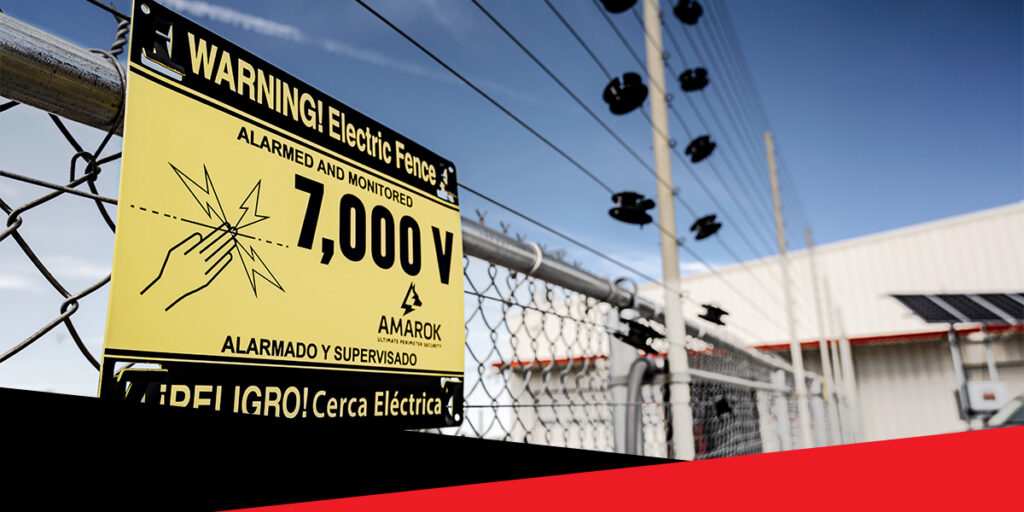
- Signage: Provides legal notice of restricted areas and designates which areas require authorization to access.
Because you must control publicly accessible areas, your perimeter barrier must create a documented, defensible line between public zones and restricted spaces. Gaps, unmarked boundaries, or informal access paths can result in a failed audit, no matter how sophisticated your inner security layers.
3. Enforce Controlled Access Points
Controlled access points implement PE-2 and PE-3 at every defined entry or exit. Each point must verify authorization before granting entry, generate an auditable log of the event, and control both ingress and egress. Your Gate Access Control systems should feature:
- Badge or proximity readers
- Key control systems
- Detailed visitor logs with entry time, exit time, escort identity, and business purpose
- Visitor escort protocols within restricted areas
- Staffed guard posts for human verification
Your access control plan must also account for after-hours and third-party access scenarios. Vendor technicians, cleaning crews, and maintenance staff working outside business hours require escorts. Unescorted access creates a PE-3 deficiency.
4. Install Real-Time Monitoring and Alert Systems
PE-6 requires real-time detection measures, documented review schedules, and escalation paths. These three components satisfy monitoring requirements:
- Detection systems: Implement video surveillance cameras, badge readers, security desk logs, or equivalent detection mechanisms at all entry and exit points.
- Review schedule: Document who reviews access logs, how frequently reviews occur, and where review records are stored.
- Incident escalation: Highlight procedures for addressing physical access anomalies, such as when badge readers log failed access attempts or cameras capture unauthorized activity.
Continuous monitoring coverage is often expected for higher-assurance environments such as Class D certifications, though the base PE-6 control leaves review frequency organization-defined. Colocation CSPs must document which monitoring responsibilities belong to the facility operator versus your team. Unclear ownership creates audit gaps.
5. Document Your Plan
Implementation without documentation creates significant audit risk. 3PAOs assess physical controls through three methods:
- Examining your SSP, policies, logs, and architectural diagrams
- Interviewing staff to verify understanding and consistent application
- Testing controls by attempting physical access or requesting evidence of operational execution
Your SSP must include implementation statements for every applicable PE control. Each statement should describe the solution, explain how it operates, identify who owns it, and specify where it applies. Colocation CSPs must designate inherited controls explicitly and reference the facility provider’s FedRAMP certification.
Prepare your evidence package early and include:
- Approved physical access authorization lists.
- Physical access logs with documented review records.
- Visitor logs showing escort assignments and their business purpose.
- Badge and key inventory records updated within the past year.
- Video surveillance coverage maps.
- Maintenance logs for access control hardware.
The most damaging gap is documented policies that aren’t operationalized. Auditors probe for enforcement evidence, not just written plans.
Protect Your Data Center With AMAROK
Building a FedRAMP-compliant perimeter protection plan requires both a clear framework and the physical security infrastructure to back it up. AMAROK’s multi-layered perimeter security solutions secure 9,000+ commercial properties across the United States, including data centers.
Our unified solution is built on The Electric Guard Dog® Fence as a physical barrier and integrated with Gate Access Control, video surveillance, and real-time monitoring. It prevents 99% of external theft for our customers after installation.
Contact us online today or call (800) 432-6391 to see how AMAROK can help strengthen your perimeter protection posture.