
Preparing for an ISO 27001 audit demands attention to every layer of protection, including physical access controls. You’ve locked down firewalls and documented every digital control, but what about the physical doors, fences, or access points that protect your servers and sensitive materials?
Strong perimeter security is a core requirement for ISO 27001 compliance. Auditors evaluate physical access controls just as rigorously as they assess your cybersecurity measures. Gaps in either area can derail certification.
Why Perimeter Security Is Non-Negotiable for ISO 27001 Compliance
The ISO 27001 standard establishes a holistic framework for managing information risks, and physical threats represent a fundamental component of that framework. Digital and physical defenses function as two sides of the same coin in the eyes of auditors.
Your organization must address both to achieve certification. Essential steps include conducting risk assessments for physical assets, implementing access control systems, and deploying advanced surveillance. You’ll also need to establish personnel protocols and integrate physical protections with cyber strategies.
ISO 27001 Annex A.7.1
Annex A.7.1 addresses the specific control for physical perimeters. The requirement states that you must establish clear boundaries that prevent unauthorized physical access, damage, and interference to information systems and assets.
A perimeter can take multiple forms depending on your facility:
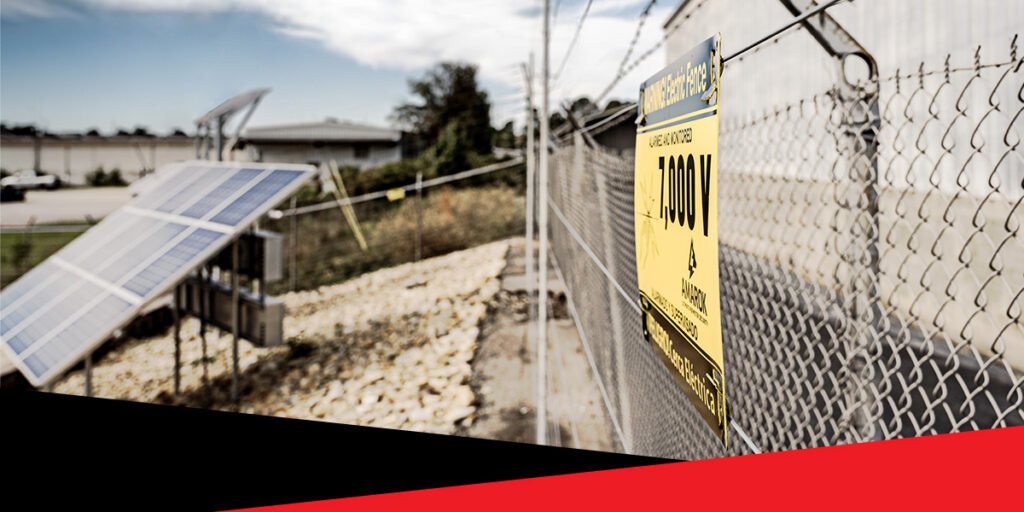
- Exterior fencing: Barriers surrounding the site perimeter that establish the outer boundary of protected areas
- Building shell: The physical structure of walls, roofs, and foundations that form the first line of defense
- Secured entry points: Controlled doors, gates, and access points with appropriate locking mechanisms
- Interior boundaries: Walls, partitions, and doors that separate high-security zones from general access areas
- Protected server rooms: Dedicated spaces with reinforced physical barriers for critical infrastructure
Document which areas require protection, then implement appropriate controls based on the sensitivity of assets within each perimeter. Facilities may require different perimeter strategies based on the nature of operations and the value of protected assets. For detailed guidance on implementing these controls, review the fundamentals of physical security compliance management.
What Auditors Look for During a Physical Security Audit
ISO 27001 is risk-based, so auditors look at any pathway that could compromise information security in addition to cyber systems. This checklist helps you prepare before the official audit identifies gaps:
Clearly Defined and Documented Perimeters
Incomplete records signal weak governance and raise immediate concerns about your overall approach to risk management. The first requirement is preparing comprehensive documentation that shows exactly which areas contain sensitive information and assets. Site plans, floor maps, and zone classifications must clearly identify protected perimeters. They must also have written justification for why certain areas receive specific protection levels.
Robust Physical Entry Controls
Bypassed controls or outdated credentials put your certification at risk. Every access point to protected areas needs documented controls. Verify that badge readers, other credential systems, visitor management protocols, and key control procedure permissions align with job roles. You must regularly review and update access rights, keeping accurate entry logs to demonstrate accountability.
Security of Offices, Rooms, and Facilities
Not every space requires the same level of protection. Auditors assess whether controls match the sensitivity of assets in each location. Server rooms, data centers, and areas housing confidential materials need stronger protection than general office space. High-security zones must demonstrate appropriate physical barriers, limited access, and additional monitoring. Environmental controls also fall under this evaluation.
Protection Against External and Environmental Threats
The building shell serves as your first defense against external threats. Expect evaluation of:
- Whether your facility can withstand forced entry attempts
- Whether windows in sensitive areas have appropriate safeguards
- Whether environmental monitoring systems detect threats such as flooding or fire
High-risk locations must demonstrate additional defensive measures.
Evidence of Physical Security Monitoring
Proof that systems actively monitor protected areas and that you respond to alerts appropriately is required. Surveillance camera coverage, intrusion detection logs, and incident response records demonstrate functional monitoring.
If your system shows signs of failure, auditors will spot the gaps. Maintain regular testing schedules and maintenance documentation to remain compliant.
Common Pitfalls in a Physical Security Audit
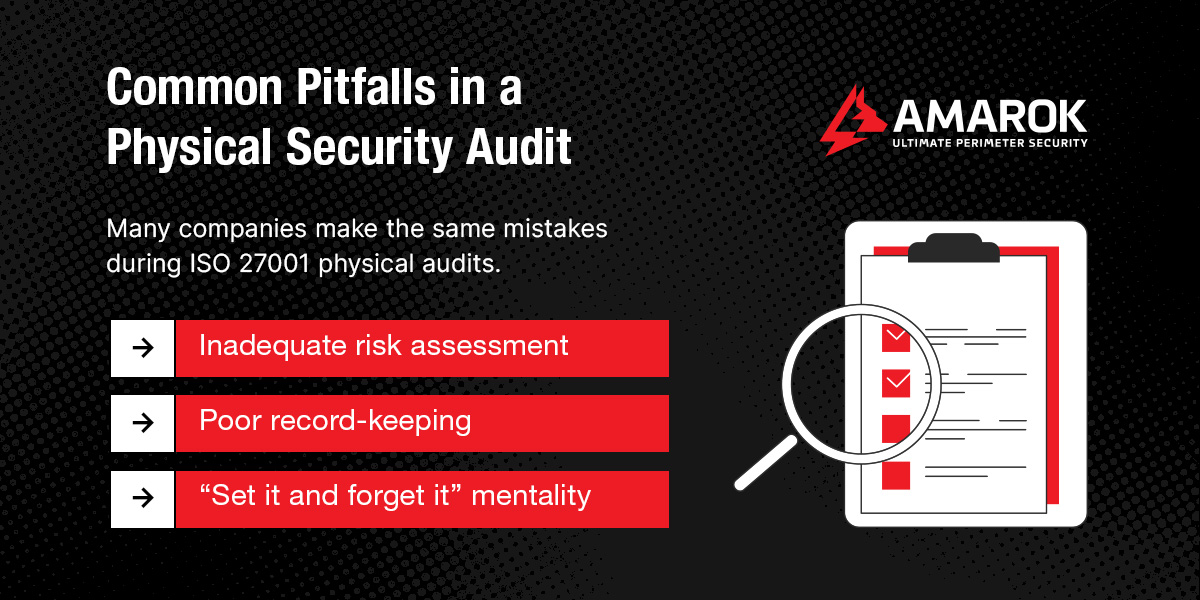
Many companies make the same mistakes during ISO 27001 physical audits.
- Inadequate risk assessment: Failing to conduct thorough evaluations of physical threats leaves vulnerabilities unidentified. Without understanding which assets face the greatest risks, you cannot implement appropriate controls or justify investments to auditors.
- Poor record-keeping: Missing maintenance records, incomplete visitor logs, and absent access control records create compliance failures. Documented evidence that systems function as intended is non-negotiable. Verbal assurances without supporting records are invalid.
- “Set it and forget it” mentality: Installing systems without regular testing, maintenance, and review guarantees eventual failure. Access permissions become outdated, cameras stop recording, and intrusion systems malfunction. Ignoring ongoing system management leads to non-compliance findings and real operational risks.
These failures lead to data breaches, asset theft, and operational disruption, jeopardizing certification and business continuity. Building your security business case helps you allocate appropriate resources before audit failures force reactive investments.
The Business Value of Strong Perimeter Security
Strong physical protection delivers benefits far beyond audit compliance.
Mitigating Data Breach Costs
Physical access to servers and network infrastructure provides cybercriminals with direct paths to sensitive data. A single unauthorized entry can bypass even the strongest digital defenses. Physical controls reduce breach likelihood and demonstrate due diligence.
Ensuring Operational Resilience
Protected facilities maintain operations during disruptions. When perimeter systems prevent unauthorized access, equipment theft, and physical tampering, critical business operations continue functioning. A multi-layered security strategy deters criminals and boosts stakeholder confidence while helping secure your ISO 27001 certification.
Protecting Brand Reputation and Customer Trust
Breaches damage reputation and erode customer confidence. Achieving ISO 27001 certification signals commitment to comprehensive practices. Customers, partners, and stakeholders recognize certification as proof that your organization takes protection seriously across all dimensions. With integrated perimeter systems, you demonstrate this commitment, showing coordinated physical and digital strategies.
Strengthen Your Perimeter Security with AMAROK
Passing an ISO 27001 audit demands a perimeter strategy that protects your assets, satisfies auditors, and supports long-term operational resilience.
AMAROK specializes in comprehensive perimeter solutions designed for organizations that take compliance seriously. Our team understands the intersection of physical and information protection. We help businesses build systems that meet ISO 27001 standards while addressing real-world threats.
Strengthen your physical security posture. Receive a free risk assessment from AMAROK to identify gaps and build a compliance-ready perimeter plan.